 | |


BIONICLE™: Mask of Light Special Report - Part 2
 Tuesday, May 13th, 2003 at 12:12am by Kelly, BZPower Co-Owner Tuesday, May 13th, 2003 at 12:12am by Kelly, BZPower Co-OwnerPart 2: From Plastic to DVD – Bringing Bionicle to Life (Read Part 1) Wind once again rattles the exhaust fan in the ceiling of Creative Capers Entertainment's office in downtown Glendale, California. Clouds running across the blue sky create a slow-motion strobing effect through the skylights, first dimming the offices, then letting bright reflections cascade off the many movie posters and framed art adorning the high walls.
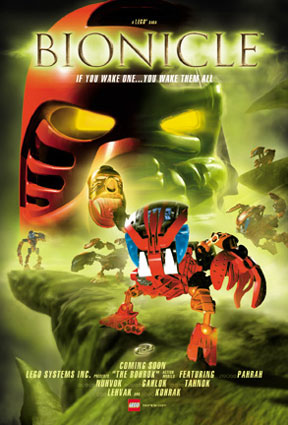
Bob Thompson, one of the executive producers and a driving force behind LEGO's first full-length motion picture, BIONICLE™: Mask of Light, takes another sip of his bottled water. Discussing the movie itself is a bit more tricky than chatting about Bionicle's history (see Part 1), since it's still relatively early in the film's production and Thompson is playing a game of how much to release, how much to tease. Rumors, theories, speculation, kudos, criticisms, and more have floated around the online Bionicle community since the movie was announced more than a year ago, and LEGO staff members are apparently following as much of the chatter as they can. The initial concept of Bionicle was to treat it as if it were a movie that didn't yet exist. The original campaign started from there, and it grew. Several movie posters were even produced and sold. The underlying thought at the time was, "Wouldn't it be great if we could make a full-length movie about this?" Evidently that attitude was contagious. In the middle of 2001, when Bionicle was becoming the surprise hit of the summer, LEGO started receiving inquiries from people in the filmmaking community. "We actually got quite a few emails asking when the movie was coming out," says Thompson. Then some major film companies began asking about film rights and distribution. Rather than get into a licensing deal, LEGO decided to retain full control over the Bionicle property and started discussions with several potential partners about a Bionicle feature film. Knowing time was a factor in keeping Bionicle in the public consciousness, LEGO decided the first step was to commission a movie to premier on DVD and video. The next was finding a scriptwriter, then an animation house.
They found four writers. Thompson and the man who wrote the Bionicle "bible," Alastair Swinnerton, along with Hollywood veterans Greg Weisman and Henry Gilroy, penned the first two drafts of the script. The team was happy with the direction the script was taking; draft in hand, LEGO set out to find just the right animation partner. Supplying a computer wireframe model and some reference material, LEGO knocked on the doors of numerous animation companies to find a partner that would be able to handle not only the technical and story details, but would also be able to produce it in record time: a 12-month production cycle. Two LEGO global vice presidents, Conny Kalcher and Stig Blicher, worked closely with Thompson during LEGO's quest for an animation partner. (Blicher is a producer, and Thompson and Kalcher executive producers of Mask of Light.) Working with several other people within LEGO, the team narrowed the search down to two companies who then produced animation tests. Once they saw the sample from Creative Capers Entertainment, the search was over. "Creative Capers got it. Got what it was all about," says Thompson.
Shortly after announcing the $5 million "Mask of Light" deal with Creative Capers in May 2002, LEGO cinched a deal with Miramax to produce a separate, full-length theatrical movie. Thompson, Kalcher and Blicher continue to work with high-profile Miramax co-chairman Harvey Weinstein; Jeffrey Tahler, Miramax vice president of acquisitions; and Kevin Kasha of Miramax, on both this year's DVD/video distribution and on the separate theatrical release. LEGO appears delighted with the partnership. "We've had a great relationship with Miramax, I can't speak highly enough about them asking the right editorial questions without dominating the production," says Thompson. "They've been a very good collaborative partner, which is what we're looking for. And they're enthusiastic."
The current movie's plot details are still under tight wraps, but the overall story focuses on the mysterious Mask of Light. A young hero and his brave companions must overcome powerful forces and dangerous obstacles in their struggle to save their world and fulfill ancient prophesies. LEGO bills it as "an epic thrill ride filled with good and evil, darkness and light, heroes and villains, BIONICLE™: MASK OF LIGHT features action-packed adventure and brings the exciting BIONICLE™ characters to life for the first time in an all-new, full-length CGI animated movie." The story focuses more on Matoran than Toa, which may be a bit surprising to the uninitiated, considering the Toa are the big selling toys. But when the first Mata Nui Online Game (produced by Templar Studios under the direction of LEGO Sr. Producer Leah Weston) was released on Bionicle.com soon after the products went on the shelves, it became apparent that the web team was onto something: they concentrated on the villagers, the Matoran, rather than the Toa, to tell their story. The audience ate it up. "(Weston and) Templar took some characters and added more life than we originally thought of," says Thompson. "The Toa are great at being heroic and strong, but not for leading you around the Bionicle universe. Matoran get the more 'human' characteristics, which are harder to ascribe to superheroes." Adding voices to the 2003 DVD/video movie fell to casting director Kris Zimmerman, another film and animation veteran. The characters of the movie fall into distinct types, and the voice actors chosen reflect that. The Matoran villagers are voiced by young adults such as Jason Michas (Takua), Chiara Zanni (Hahli), and Andrew Francis (Jaller), while village elders (Turaga) are voiced by more mature actors like Chris Gaze (Vakama) and Dale Wilson (Onewa/Lewa). Of course, the heroes and villain will sound like heroes and villains. All the voices will be treated in postproduction, and Thompson confides that the voice of Makuta (Lee Tockar) on the recently-released trailer wasn't quite finished yet – deeper tones are being added. Thompson smiles when asked if they sought voice talent inspiration from BZPower forums. "Oh yes," he laughs, "we had great fun reading them. But how could we afford some of the actors?"
The voice actors, especially the younger ones, bonded quite well both personally and during recording, according to Thompson. In fact, Jason Michas, who eventually voiced Takua, originally read for the part of Jaller. He came in a bit late, slightly disarrayed, a little distracted, and read the Jaller part. Andrew Francis, who was punctual and precise, came in to read for Takua. After consultation, they were asked to switch roles and it clicked. Most of the dialogue was recorded in 2002, but as is normal with animated projects, some dialogue is being redone during ADR (Additional Dialogue Recording). About 30 percent of the final dialogue will be added during ADR, which is now underway.
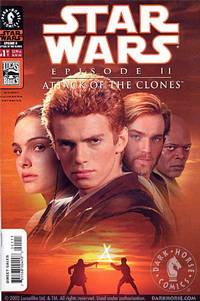
The man responsible for putting words in mouths (or more accurately, masks) of characters quietly enters the office, politely waiting for Thompson to finish his thought. Henry Gilroy is not exactly what one would picture of an accomplished Hollywood screenwriter – in fact, he's quite the opposite of glitz and superficial Tinseltown glamour. Wearing a Bionicle hat, a denim jacket, and a few days worth of beard, Gilroy smiles warmly and settles in while Thompson takes the opportunity to make a few phone calls. A veteran of more than a decade of story editing and scriptwriting, Gilroy is a thoroughly likable character himself. There's an unpretentious "real-life" quality about him as he describes his background. While he's understandably proud of having worked on dozens of Disney projects, and has done comic adaptions for Lucasfilm and Darkhorse Comics on the last two Star Wars movies, it doesn't seem to have gone to his head. Gilroy is matter-of-fact about the volume of work he's done in the last decade. "I've written a bunch of scripts and also story edited a bunch for a variety of different shows," he said. "Story editing is like being the boss of the writers, so you work with a writer to develop the premise, outline and script, then get it in shape for the producers of the show. I've story edited and written over a hundred and fifty episodes that have been produced over the last 12 years." His enthusiasm is obvious with everything he discusses.
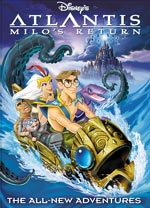
His resume is a veritable who's who of contemporary animation: from the charmingly eclectic The Tick to quintessential Disney Mouseworks and House of Mouse, Gilroy's done half hour episodes, 11 minute episodes, 7 minute shorts, and also movie-length scripts. Timon & Pumbaa, Teamo Supremo, Lilo & Stitch: the series, and the animated Batman series form just a part of his impressive resume. The latest is Atlantis 2: Milo's Return which he co-wrote, and is due out in May on video and DVD. Gilroy started by learning the mechanical side of making cartoons. "I was a film editor and I kept pitching story ideas to the producers, and eventually they gave me a chance to write. Luckily I've been doing it ever since. I've always had a great love for animation and the wonderful things it can achieve in storytelling. I'm still striving to write the perfect animation script!" He's always loved the idea of heroes with a strict code of honor, protecting those who couldn't defend themselves from evil. "I grew up reading superhero comic books like Spiderman, The Flash, and Batman, all of which have qualities that remind me of the Toa," he says.
Gilroy began writing Bionicle: Mask of Light in January 2002 with Thompson, Greg Weisman, and Alastair Swinnerton. "The second I got the assignment I fell in love with the Bionicle world," he says. "I wanted to get as many of the great characters, be they Matoran, Turaga or Toa as possible in to the story. I wanted to explore as many of the cool locations of the island of Mata Nui as we could. It had to combine moments of big action, with big fantasy like we've never seen it. Mask of Light would be the biggest story I'd ever written. But it had to be epic, large enough in scope to change the whole world of Bionicle forever, yet follow seemingly small characters, whose actions would determine the fate of the whole island. Why? Because Bionicle fans would accept no less!" Less than four months later, he had something ready. The script eventually went through eight drafts, which he says is typical for this type of project. It's a far cry from working on Disney scripts, which are redrafted repeatedly. The typical Disney script goes through about 35 drafts, according to Gilroy, and scripts can even go as high as 60 drafts as in the case of Dreamworks SKG's Road to El Dorado.
This project was very collaborative, he says. "Bob is the George Lucas of LEGO – he's one of the brightest guys I've met in big picture stuff." Gilroy also has kept up on the other aspects of Bionicle – he avidly follows the comics (written by the prolific Greg Farshtey of LEGO), and cruises the BZPower forums daily. He's even a member, with a username taken from the script, although it seems no one has picked up on his identity quite yet even though he announced himself in at least one thread. During the planning of the script, a lot of time was devoted to deciding how the characters talked and interacted with each other. For example, Lewa uses a lot of "treespeak" – Le-Koronan slang of combining words, such as "highflying" for airborne, "lowduck" for crouch, etc. Kopaka never uses two words when one will do, and he's even more standoffish than in the comics or on the web. Tahu is overall a bit less stern than portrayed elsewhere. Essentially, their defining characteristics are being accentuated to help distinguish the Toa and flesh out their identities.
Another consideration was avoiding dated material. Gilroy and Thompson were emphatic about making the script as timeless as possible by not using popular references. The story is set on an island in the middle of an endless ocean – the inhabitants aren't going to know about a phrase popularized by a commercial, or the latest Saturday Night Live skit. And recognizing the international appeal of Bionicle, the script needed to appeal to (and be restricted by) an international audience. Something relevant to the US audience might not be understood or appreciated by a Japanese or European audience, and vice versa. Gilroy's background of reading and writing superheroes has prepared him well for Bionicle. "Spiderman is a bit similar to Lewa, flipping and gliding all over the place and always rushing into trouble, and Pohatu reminds me of The Flash, good-natured and super quick with his Kakama, while Kopaka makes me think of Batman, someone who's short on words, but big on action. So I jumped at the chance to write for Bionicle!" He's even been able to write for comic books – last year he wrote the comic book adaptations for Star Wars Episode II: Attack of the Clones for Dark Horse Comics. He's very enthusiastic about the future of Bionicle, which is one of his favorite projects. "I just want to assure the fans that in my opinion the best is yet to come. Bob Thompson and the LEGO story team have plans for the Matoran, the Turaga and the Toa that are going to blow you all away! So if you know someone who's only thinking about getting into Bionicle - tell them to hop aboard now, because it only gets better!" Coming on Thursday: The directors and producer shed some light on Mask of Light and what it takes to bring the story of Mata Nui alive. Meet more of the many people behind the making of the movie. Story by Kelly McKiernan, News Editor
|



)